Insights
Why Returned Products Lose Value So Quickly
This article explores how delays, handling, and slow decision-making erode recovery value for returned products, emphasizing the importance of fast condition assessments and intelligent routing.

Why Returned Products Lose Value So Quickly
Returned products don't lose value because they come back. They lose value while retailers decide what to do next. This article explores how delays, handling and slow decision-making erode recovery value, and why faster condition assessment and intelligent routing are becoming essential to protecting margins.
A returned product doesn't lose value because it comes back.
It loses value because time starts working against it.
Every day spent waiting for a decision creates more risk.
Seasons change.
Markdowns increase.
Packaging deteriorates.
Inventory sits idle.
And products that were once perfectly saleable gradually lose their best recovery opportunities.
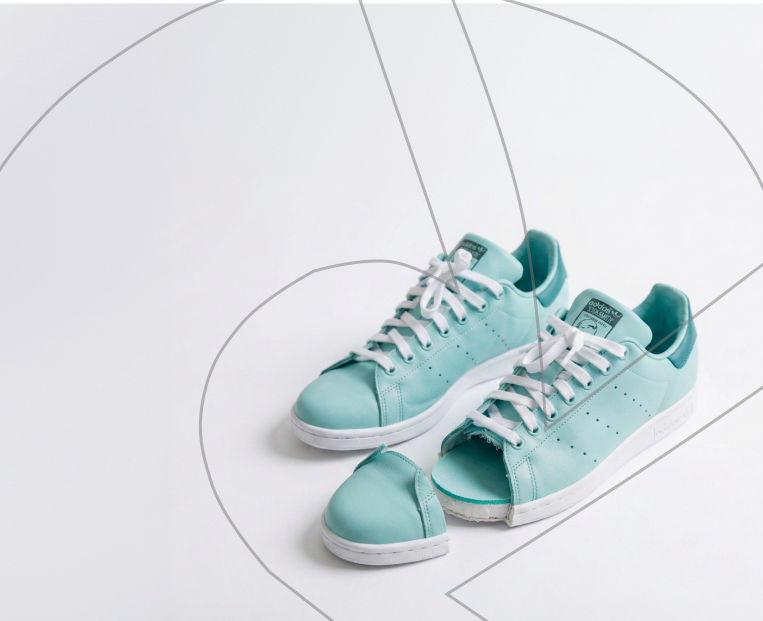
Research suggests fewer than half of returned goods are ultimately resold at full price. In apparel and footwear, the figure falls to just 35%.
The challenge isn't the return itself.
It's everything that happens afterwards.
Value Erosion Starts Earlier Than Most Retailers Realise
Many retailers assume value loss begins when products reach the warehouse.
In reality, it often starts much earlier.
Products spend days travelling through reverse logistics networks. They are unpacked, repacked and handled multiple times. Customers may not return them in their original packaging. Minor marks, creases and damaged labels all reduce the likelihood of reselling at full price.
Research shows that slow returns processes can result in products entering markdown cycles or even being treated as unsuitable for future sale. Every additional journey and every extra pair of hands increases the risk of damage.
By the time warehouse teams inspect the product, some of the value may already have disappeared.
Value Can Disappear Before Products Even Start Their Journey
Value erosion doesn't begin when products reach the warehouse.
In many cases, it starts long before the return label is even scanned.
Customers often take the full returns window before sending products back. By the time an item enters the reverse logistics network, weeks may have passed since it was originally purchased. Seasonal demand may have shifted, promotions may have ended and replacement stock may already be arriving.
Fashion products are particularly vulnerable to these delays.
An item returned after 30 days may face a very different commercial reality than the same product returned after five.
By the time the product reaches the warehouse, value may already have started to disappear.
Small Problems Create Big Value Differences
The difference between full-price resale and markdown is often surprisingly small.
A missing tag.
Creased packaging.
A deodorant mark.
Minor scuffing.
These issues may not affect the functionality of the product, but they can dramatically alter how it is graded and where it can be sold.
What could have been sold again at full price may end up in outlet channels, resale programmes or lower-value recovery pathways.
Condition accuracy matters because recovery decisions determine commercial outcomes.
Returned Products Behave Like Unexpected Inventory
Returned products behave like unexpected inventory.
They occupy space, tie up working capital and become harder to sell as time passes.
The longer products sit waiting for decisions, the more likely retailers are to face markdowns and lower recovery values.
What starts as a returns problem quickly becomes an inventory problem.
And eventually, a profitability problem.
Speed Protects Profit
Fast decisions matter because many ecommerce businesses make very little margin on the first sale.
Research highlighted by Vogue Business found that, in ecommerce, the second sale is often where profitability is created.
Returned inventory that can be restored and resold quickly protects those margins.
Leading retailers are increasingly treating speed as a competitive advantage.
Products returned today need to be available for sale tomorrow, not sitting in a holding area waiting for manual decisions.
Research suggests that most retailers recover only around half of a product's original value once it enters the returns process. Faster, data-driven routing can increase recovery rates significantly.
The sooner retailers understand condition and determine the next best outcome, the greater the recovery value.
Not Every Product Needs To Come Back
Preserving value doesn't always mean bringing products back to the warehouse.
Sometimes the best outcome is immediate restocking.
Sometimes it's resale.
Sometimes it's refurbishment.
And sometimes bringing the product back simply makes no commercial sense.
A low-value item may cost more to recover than it is worth. In those situations, recycling, donation or even allowing the customer to keep the product may deliver a better commercial outcome.
The goal isn't to bring everything back.
It's to maximise value.
Circular Models Need Better Execution
Retailers increasingly recognise the opportunity.
Research from the Circular Fashion Innovation Network found that 81% of organisations surveyed have circularity embedded within their five-year strategy. Yet 63% of customer-facing circular initiatives remain in pilot phases.
The ambition is there.
The challenge is operational execution.
Without fast condition assessment and intelligent routing, products continue to lose value while retailers struggle to scale resale, repair and recovery programmes.
Why Early Decisions Matter
The sooner retailers understand what has been returned, what condition it is in and what it is worth, the sooner they can protect value.
Waiting until products arrive back at the warehouse means decisions happen after costs have already been incurred and value has already begun to disappear.
Back helps retailers bring those decisions forward.
By assessing condition before products enter the reverse logistics network and applying intelligent routing rules, retailers can protect margins, reduce unnecessary handling and maximise recovery value.
Because returned products don't lose value because customers send them back.
They lose value while retailers are deciding what to do next.
Explore Recommerce & Recovery →
Learn how Back helps retailers recover more value from returned inventory through intelligent routing and early decision-making.
Sources
• The Robin Report (2025), Fewer Than Half of Returned Goods Are Resold at Full Price
• Baum et al. (2026), From Cost Center to Competitive Advantage: Modernizing Reverse Logistics with AI
• Circular Fashion Innovation Network (2025), Accelerating Towards a Circular Fashion Ecosystem in the UK