Insights
Why Retailers Won't Be Able to Destroy Unsold Products Anymore
Why Retailers Won't Be Able to Destroy Unsold Products Anymore Retailers are under increasing pressure to prove what happens to returned and unsold products. This article explores why destruction is becoming harder to justify, how new

Why Retailers Won't Be Able to Destroy Unsold Products Anymore
Retailers are under increasing pressure to prove what happens to returned and unsold products. This article explores why destruction is becoming harder to justify, how new legislation is accelerating the shift towards circularity, and why faster recovery decisions are key to keeping products in circulation and recovering more value from returned inventory.
IMAGE
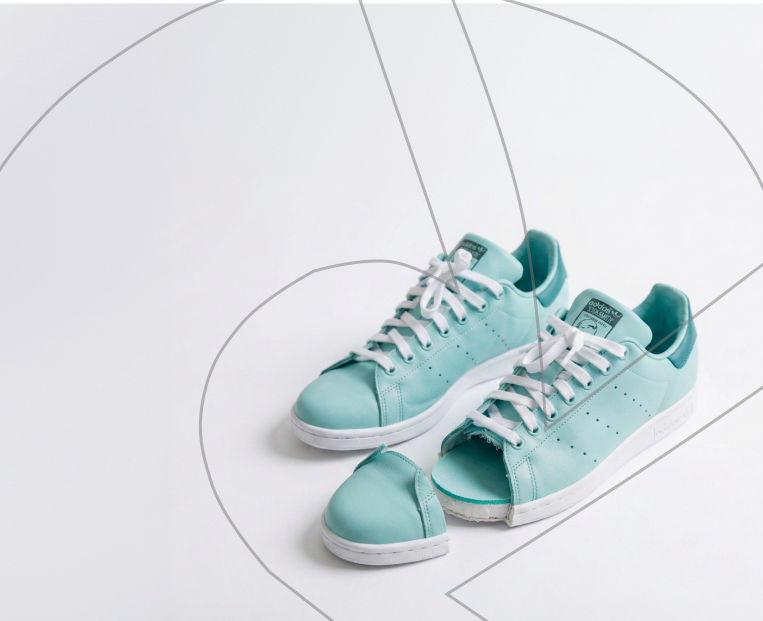
No retailer sets out to destroy products. Yet products that miss their resale window, sit in warehouses for too long or lack a clear recovery pathway can eventually become write-offs. What starts as a returns problem can quickly become a waste problem.
That outcome is becoming increasingly difficult to justify. Consumers expect products to remain in circulation for longer. Brands face growing pressure to demonstrate their sustainability credentials. And new legislation means that, for many retailers, destruction will no longer be an option.
The future of retail is moving away from disposal and towards recovery.
New EU Rules Are Changing The Industry
Under the EU's Ecodesign for Sustainable Products Regulation (ESPR), large companies will be prohibited from destroying unsold apparel and footwear from July 2026. Medium-sized businesses will follow from 2030.
The legislation forms part of a broader push towards circularity and greater producer responsibility, but it represents something much bigger than a ban on destruction. ESPR shifts the conversation from waste management to product lifecycle accountability.
Historically, returns have been treated primarily as a cost problem. Retailers have focused on reducing reverse logistics costs, speeding up processing and limiting fraud. Those challenges still matter, but legislation like ESPR introduces a new dimension.
Returned products are increasingly becoming part of a wider lifecycle management system. Questions that were once optional are becoming more important. Can the product be resold? Can it be repaired or refurbished? Can it be recycled? Can its next destination be tracked and reported?
Returns are no longer simply the end of a transaction. They are becoming a reflection of how products are managed throughout their lifecycle.
Regulation is only part of the story. Retailers are also facing growing pressure from consumers, investors and stakeholders to demonstrate how products are recovered, reused and kept in circulation. For many brands, the question is no longer whether products should be given a second life. It's how to make that happen at scale.
Consumers Expect Products To Get A Second Life
Consumers increasingly expect returned products to remain in use. Research shows that 85% of consumers assume returned products are reused or refurbished, while 81% want retailers to disclose what happens to returned inventory. Around 60% say that understanding what happens to returns builds trust, and more than half say proof of reuse positively influences purchasing decisions.
Consumers increasingly expect evidence, not simply sustainability claims. The challenge is that many retailers still struggle to provide that visibility.
Destruction Is Often A Symptom, Not The Problem
Very few retailers deliberately choose destruction as a strategy. In reality, destruction is usually the consequence of delayed decisions and limited recovery options rather than a deliberate objective. Returns sit in holding areas, condition assessments vary, recovery pathways are unclear and manual processes create delays. By the time products reach the end of the process, much of their value has already disappeared.
Research suggests that between 22% and 43% of returned apparel never reaches another consumer.
The problem isn't disposal. The problem is delayed recovery.
Returned Products Still Have Value
Returned products are not waste. They are inventory. Some products can be returned to primary stock. Others are suitable for resale. Some can be repaired, refurbished or donated, while others can be recycled through specialist recovery partners.
Consumers are increasingly comfortable with these alternatives. Research shows that 82% are open to purchasing open-box products, while 61% have already purchased refurbished or second-life products.
Demand for recommerce already exists. The challenge is operationalising recovery efficiently and consistently. Knowing the next best destination for every product is one thing. Making that decision quickly enough to preserve value is another.
The Cost Of Waiting
Every delay reduces value. Seasonality changes. Markdowns increase. Working capital becomes trapped and recovery opportunities become more limited. As recovery windows close, retailers lose more than margin. They lose resale opportunities, increase waste and limit the options available for keeping products in circulation.
The longer products remain in operational limbo, the fewer recovery pathways remain.
What eventually becomes a write-off often started as a perfectly recoverable product. Destruction is rarely the root cause. More often, it is the final consequence of slow decisions, poor visibility and limited recovery pathways.
The real challenge isn't what happens at the end of the process. It's what happens before products get there.
The Future Is About Accountability, Not Disposal
The ability to destroy products is disappearing. But the bigger change is that retailers are increasingly expected to understand and demonstrate what happens next.
Every returned product has a next best use. The challenge is identifying it early enough. By the time a product reaches the end of the process, much of its value has often already disappeared.
The future of returns isn't about finding better ways to dispose of products. It's about making better decisions sooner.
How Back Helps
Back helps retailers make recovery decisions before products disappear into operational limbo. By combining AI-powered visual inspection, intelligent routing and configurable rules, Back enables retailers to understand condition earlier, reduce unnecessary handling and route products towards the most valuable outcome, whether that's resale, refurbishment, donation or recycling.
By helping retailers make better decisions sooner, Back supports circular commerce initiatives, reduces markdowns and write-offs and helps recover more value from returned inventory.
The future of returns isn't disposal. It's finding the next best outcome for every product.
Explore Recommerce & Recovery → Learn how Back helps retailers recover more value from returned inventory through intelligent routing and early decision-making.
Sources
• European Commission (2026), New EU Rules to Stop the Destruction of Unsold Clothes and Shoes • British Retail Consortium (2026), New EU Rules to Stop the Destruction of Unsold Clothes and Shoes • ReturnPro (2026), The Consumer Sustainability Proof Gap Retail Can't Ignore • Resources, Conservation and Recycling (2024), Product Flows and GHG Emissions of Returned Apparel in the EU • Regina Frei, University of the Arts London, Research into the Cost of Returns • Zhang et al. (2023), Sustainable Returns Management Research