Insights
What Is Wardrobing? How Retailers Are Using AI to Prevent Returns Fraud
Wardrobing is a form of returns fraud that impacts fashion retailers significantly. This article discusses how AI can help detect and prevent such fraudulent returns while maintaining a smooth customer experience.
What Is Wardrobing? How Retailers Are Using AI to Prevent Returns Fraud
Wardrobing has become one of the most expensive and difficult forms of returns fraud for fashion retailers. This article explores why traditional warehouse inspections happen too late, how customer behaviour and AI can help identify risk earlier, and how retailers are using intelligent verification to protect margins without creating unnecessary friction for honest customers.
Most returns are genuine.
Customers order the wrong size. They change their mind. The product doesn't fit as expected.
But not every purchase is intended to stay in the customer's wardrobe.
Some products are bought with the intention of being worn once and returned for a refund.
This behaviour is known as wardrobing, and for fashion retailers, it has become one of the most difficult forms of returns fraud to detect.
The problem isn't simply identifying worn products.
It's identifying them before the costs have already been incurred.
What Is Wardrobing?
Wardrobing occurs when customers buy products, use them and then return them as though they are unused.
It can take many forms.
A dress worn once to a wedding.
Shoes bought for a holiday and returned afterwards.
Products returned with damaged packaging or missing tags.
Claims that an item is faulty to explain signs of wear.
Unlike organised fraud, wardrobing often exists in a grey area. Some consumers don't even view the behaviour as dishonest.
But for retailers, the impact is very real.
Wardrobing Is More Common Than Many Retailers Realise
Research suggests that one in five shoppers have engaged in wardrobing, while 43% of consumers aged 16-25 say they are likely to continue the behaviour in future.
As returns become easier and consumers become more accustomed to frictionless refunds, the line between genuine returns and deliberate misuse becomes increasingly blurred.
The challenge for retailers is that most customers are honest.
It's the minority that create the majority of the problem.
Why Wardrobing Is So Expensive
When a worn product is returned, the retailer doesn't just lose the sale.
Transportation costs have already been incurred.
Warehouse teams spend time processing the return.
Products may need cleaning, repairs or markdowns before they can be sold again.
And some items can no longer be resold at all.
Research suggests retailers lose an average of $10 for every $100 of wardrobed returns they accept.
At scale, these losses quickly become significant.
Repeat Offenders Are Difficult To Spot
Wardrobing isn't always a one-off event.
Studies found that 14% of shoppers admit to wardrobing. More concerningly, 97% reported no difficulty returning those items and 63% said they would do it again.
In fact, just 10% of offenders account for 35% of all incidents.
The problem is that traditional returns processes treat every customer the same.
Most retailers don't have the tools to distinguish between loyal customers and repeat abusers.
As a result, genuine shoppers often experience unnecessary friction while the minority responsible for repeated abuse continue to slip through the net.
Returns Fraud Is Becoming More Sophisticated
Wardrobing is only one part of the problem.
As digital tools become more accessible, some consumers are becoming increasingly sophisticated in how they exploit returns policies.
Research from Ravelin found that frequent refund abusers gain an average of £961 per year through fraudulent behaviour. Almost half intentionally over-order, one in three believe AI makes refunds easier, and 46% say they get away with it every time.
Fraud is evolving.
And increasingly, technology is being used on both sides.
Why Warehouse Inspection Comes Too Late
Most retailers only assess product condition after products arrive back at the warehouse.
The customer requests a return.
A label is generated.
Shipping costs are incurred.
Warehouse teams inspect the product.
And only then are signs of wear discovered.
By that point, the costs have already been incurred.
Preventing fraud is always cheaper than processing it.
Which raises an important question.
Why wait until products arrive back at the warehouse to discover they've already been worn?
Research from Narvar and Two Boxes found that 10.5% of returns show signs of wear or use before being returned.
Yet most retailers only identify these issues once products have already entered the reverse logistics network.
Customer Behaviour Can Reveal Risk
Signs of wear aren't the only indicator.
Behaviour can provide valuable clues too.
Research from ReBound found that returns flagged as potentially fraudulent had a median lead time of 18 days, compared with 9.5 days for typical returns.
Holding onto products for longer doesn't prove abuse.
But when combined with customer history, product category and visual inspection, it can help retailers apply the right level of scrutiny to the right returns.
Because preventing fraud shouldn't mean treating every customer like a fraudster.
How Retailers Are Using AI To Fight Returns Fraud
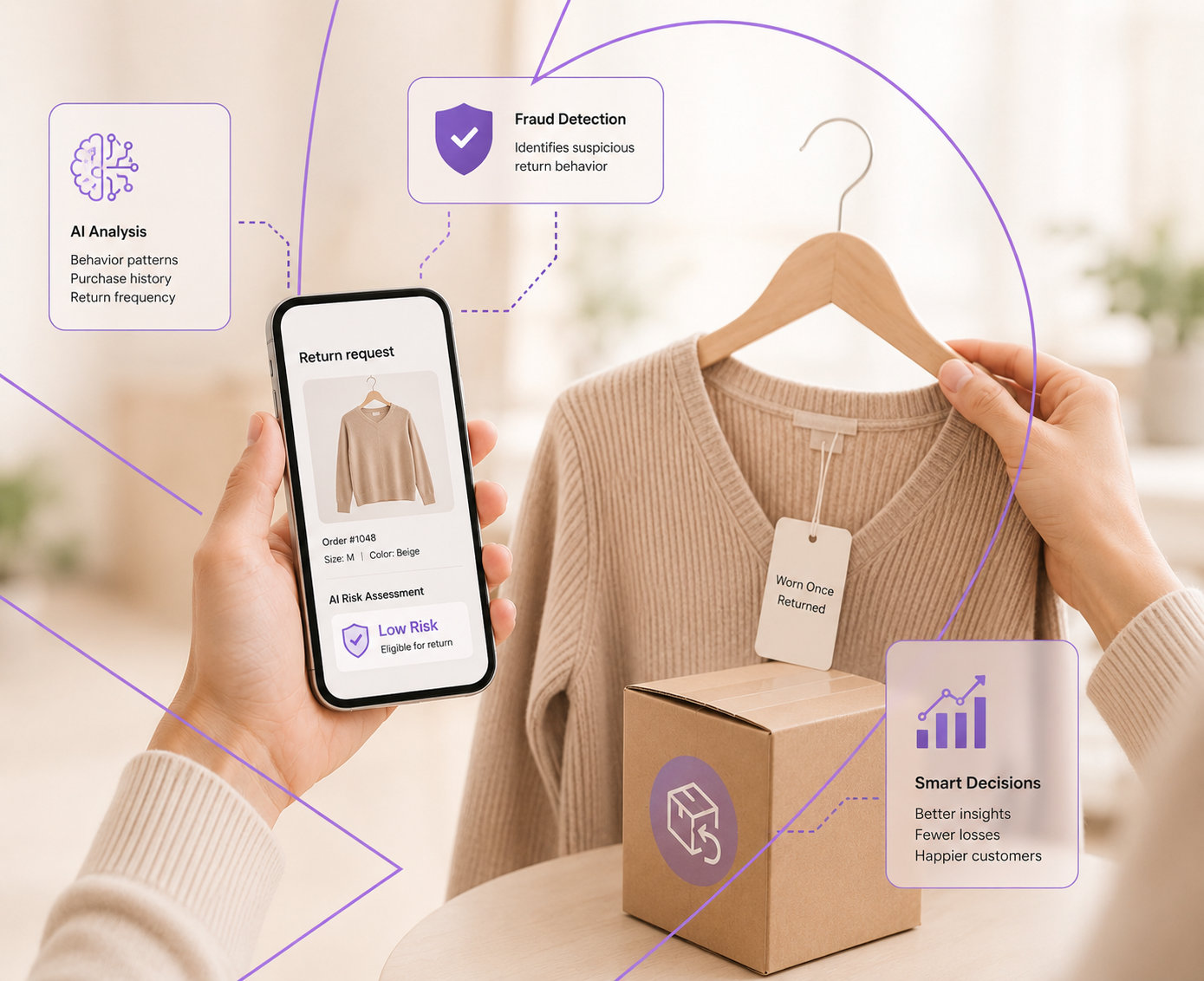
Artificial intelligence is increasingly being used to help retailers identify risk earlier and make smarter decisions.
Retailers are using AI to:
• Analyse customer-submitted imagery for signs of wear.
• Detect unusual customer behaviour and serial returners.
• Identify inconsistencies between return reasons and product condition.
• Apply different levels of verification based on risk.
• Personalise returns policies according to customer history.
• Prioritise trusted customers with faster resolutions.
The objective isn't to create friction.
It's to focus attention where it matters most.
How Back Helps Prevent Wardrobing
At Back, we believe decisions should happen before products enter expensive reverse logistics networks.
Our AI-powered visual inspection technology helps retailers understand what has been returned and what condition it is in before unnecessary costs are incurred.
Customer-submitted images can help identify:
• Sole wear on shoes.
• Stains and marks.
• Missing tags or packaging.
• Visible signs of use.
• Fault claims that don't align with the condition of the product.
Back combines this visual evidence with customer intelligence and configurable rules to apply the right level of trust to the right returns.
But AI isn't just helping retailers identify physical signs of wear.
It can also help fight AI-enabled fraud.
As image editing tools become more sophisticated, retailers face growing risks from manipulated photos used to support false SNAD (Significantly Not As Described) claims. Rather than allowing customers to simply upload existing images from their camera roll, Back requires photos to be captured live during the returns journey.
This helps ensure images are genuine, current and linked to the actual product being returned, reducing the risk of edited or AI-generated images being used to obtain unwarranted refunds.
In other words, AI can help retailers fight AI.
Trusted customers can enjoy faster resolutions.
Higher-risk returns can receive additional checks.
Because not every return is the same.
And not every customer should be treated the same either.
Smarter Returns Protect Honest Customers
Most customers are honest.
AI isn't about treating everyone with suspicion.
It's about recognising the small number of returns that warrant closer attention while delivering a better experience for genuine shoppers.
The sooner retailers understand what has been returned and what condition it is in, the sooner they can protect value.
Because preventing fraud is always cheaper than processing it.
Explore Back's AI Inspection & Rules Engine →
Learn how Back helps retailers identify signs of wear earlier, reduce returns abuse and protect margins through AI-powered inspection and intelligent decision-making.
Sources
• ZigZag (2024), What Is Wardrobing and How Can Retailers Stop It? • ECR Retail Loss (2025), Wardrobing: Ten Questions Every Fashion Retailer Should Ask • ReBound (2025), Returns Fraud Playbook • Narvar & Two Boxes (2025), How to Slash the Costs of E-Commerce Returns While Providing an Excellent Customer Experience • Ravelin (2025), State of Refund Abuse Report